
Baron Opportunity Fund | Q4 2025
Review & Outlook
Market Backdrop
The fourth quarter of 2025 provided a steady finish to an otherwise turbulent year, with moderate gains across most indices amid easing economic pressures and holiday-season stability. The S&P 500 Index advanced 2.66% in the fourth quarter, supported by continued recovery momentum, while the NASDAQ Composite Index rose 2.72%. December 2025 was relatively flat, with the S&P 500 inching up just 0.06%, and the NASDAQ slipping 0.47%.
Several factors underpinned fourth quarter gains and a sustained market rebound from the April 8 lows: moderating tariff impacts, robust corporate earnings, and continued monetary easing. Following a September rate cut of 25 basis points, the Federal Reserve lowered rates twice more during the fourth quarter – by 25 bps each in October and December.
Performance
We manage the Fund with an unwavering focus on powerful secular growth trends that disrupt industries and drive sustained, high-impact, and profitable growth opportunities. Transformative secular trends—such as AI; space exploration and technology; autonomous transportation; robotics; digital commerce, media, finance; advanced therapeutics and minimally invasive surgery— will shape the future and drive long-term investment returns.
Investments in these trends yielded solid gains in the fourth quarter and strong returns for the year, with the Fund increasing almost 5% for the quarter and just under 20% for the year, beating the Benchmark for both periods.
The Fund’s outperformance for the quarter was driven by stock picking–across a diversified set of innovation and secular growth leaders. Our stand-out contributor to relative and absolute performance during the period was launch and satellite broadband groundbreaker Space Exploration Technologies Corp. (SpaceX), a high-profile private company founded by Elon Musk. SpaceX is now the second largest holding in the portfolio and the largest overweight position versus the Benchmark. Musk’s AI innovator, X.AI Holdings Corp. (xAI), founded not quite three years ago with the ambitious mission “to understand the true nature of the universe,” was the portfolio’s second-best performer. We purchased additional xAI shares during the quarter.
From a sector perspective, the Fund’s Health Care investments performed well, with solid gains and relative performance from Exact Sciences Corporation (non-invasive cancer screening and diagnostic test leader), argenx SE (immunology and antibody-based medicine innovator), and Eli Lilly and Company (GLP-1 pioneer), partially offset by a pullback in Arcellx, Inc. (T-cell therapy innovator).
Like last quarter, the Fund’s investment in Spotify Technology S.A. (global streaming music and content leader) and its non-ownership of Alphabet Inc., which continued its strong second half run in the fourth quarter, both negatively impacted relative performance. Spotify, discussed more fully below, posted solid gains for the year (up 30%), but hurt relative performance for the quarter because it is one of the largest overweight positions in the portfolio. Alphabet (Google), as we discussed in our prior letter, stands at the crossroads of AI. It possesses the scale, technical advantages, brands, and distribution to be a long-term AI winner, and its innovation and execution cadence improved in the later part of the year. But it also has a lot to lose if its near-monopoly commercial search business is disrupted by AI. We continue to carefully study and analyze Alphabet as part of our broader AI, e-commerce, and digital media/advertising coverage.
AI Update
Now just over three years since the “ChatGPT moment” rang the opening bell of the age of AI, there remains little dispute that AI is the most powerful and impactful technology platform shift and secular growth driver since the advent of the internet itself. It has also been the predominant driver of stock leadership and returns over the last three years. On stage at this year’s Baron Investment Conference, my colleague Ashim Mehra5 and I answered questions about AI. Here’s a snapshot of what we presented:
- There is plenty of debate about AI—among investors and certainly in the finance media, whether CNBC, bloggers, podcasters, and X posters. We’ve seen AI sell offs—both broad based and stock specific—on clips or sound bites taken out of context or on trepidations like the DeepSeek alarm that sounded earlier this year. We did a public webinar on the Deep Seek scare and explained that the reported innovations, if true, were merely another data point on the AI innovation line and would have been dismissed if the AI Lab had been, say, French instead of Chinese. We explained how financial and social media pundits played up Sputnik type fears to get eyeballs and engagement. We caution investors to separate the signal from the noise and not get caught in sentiment swings.
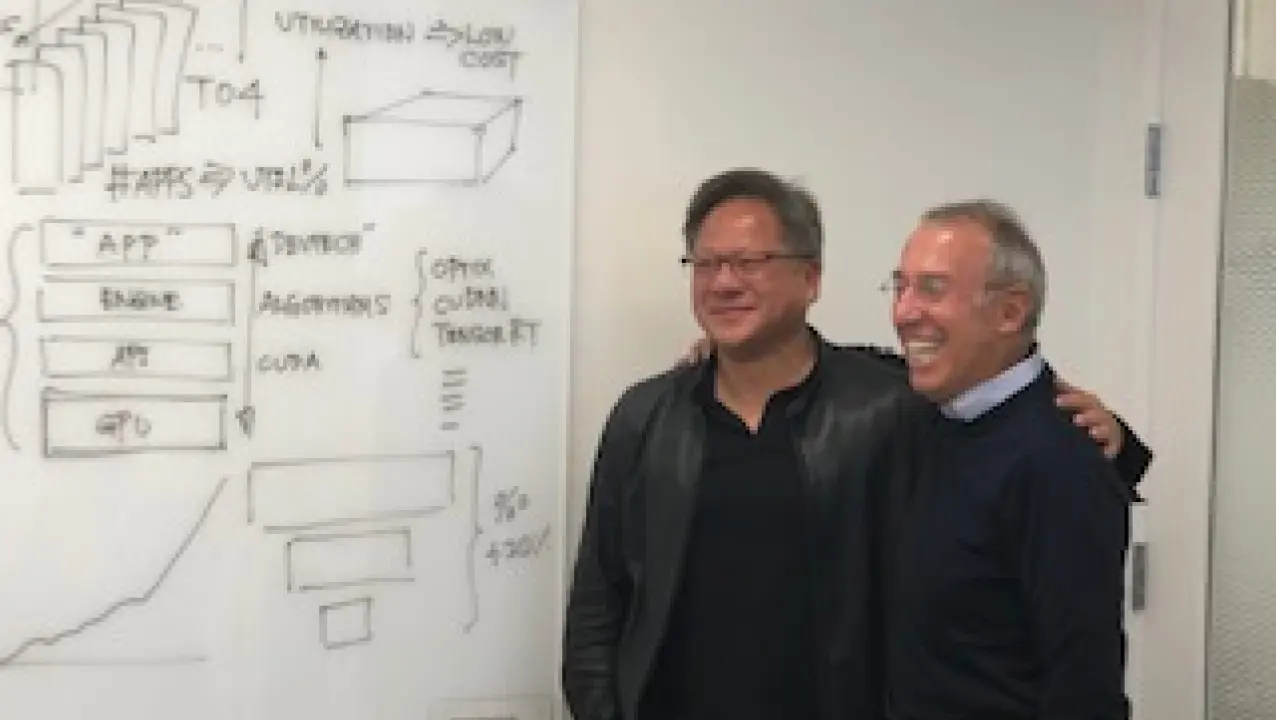
- At Baron, we are deep research, evidence-based investors. We are positive about AI because it is real. It is the most significant change to the global economy since the internet itself. Every digital interaction of today forward will have AI as the brains of the application. We have investments across all the layers of the AI stack and spanning industries. Our most successful investments to date have been in the infrastructure or compute layer. We were early investors in NVIDIA Corporation, over four years before the ChapGPT moment of November 2022, and it has been more than a 10-bagger for the Fund. Several of us spent a full day with founder and CEO Jensen Huang in the Fall of 2018, where he went to the white board to teach us about AI and why NVIDIA would win.
November 28, 2018
- We invested in Broadcom Inc. nearly two years ago after spending two hours with its CEO and founder, Hock Tan. Broadcom has already been a 2.5-bagger for the Fund. These returns resulted from explosive growth not multiple expansion.
- As you witnessed with the CEOs who spoke this morning, Baron research starts with people. We look for founders and management teams that are exceptional–but also who think long term and remain focused on building, not just managing. We also believe that sustained innovation is the competitive advantage of the future. In the past a moat might have meant first-to-market, a distribution network, intellectual property, brands, or scale, and while these hold true, we think in today’s fast-moving world how fast a company can innovate, adapt, launch, and then scale new products is another critical competitive advantage. Baron investments like NVIDIA, Tesla, Inc., SpaceX, Spotify, and Shopify Inc. embody this mindset.
- We are not resting on our laurels; we are investing forward. The theme of the conference 10 years ago was “question everything.” That’s a key part of our research DNA and what we’re doing with AI. While I don’t have the time to list everything, a few of the key issues that we are questioning and studying include: scaling laws for model training, post training, and reasoning; the adoption, penetration, impact, and value (cost savings or monetization) of AI workflows and use cases for consumers and businesses alike; whether we can generate and deliver enough energy to power the compute data centers; and how AI investments will be financed, including how that will be different for the Magnificent Seven players like Alphabet, Amazon.com, Inc., Microsoft Corporation, and Tesla, who can fund their investments with internal cash flow versus the AI lab start-ups like OpenAI, xAI, and Anthropic, which need outside financing.
- In our view, the most important thing to study is not the race to artificial general intelligence or artificial super intelligence but the utility and value of AI. I recently listened to a recent podcast with Andrei Karpathy, a prominent AI researcher and engineer, who worked at both OpenAI and Tesla, and who we have met in our work at Baron. One thing resonated with me (and I’m paraphrasing): Let’s focus on building useful things, not AI animals.
- AI is already delivering value and proving useful: AI software code development—near 100% adoption and productivity improvements of 30% to 50% or higher; AI has delivered significant cost savings in customer service; Tesla Robotaxis are driven by AI; Axon Enterprise, Inc. is using AI to prepare first drafts of police reports; Heartflow, Inc. is using AI to advance heart disease diagnostics and save lives; and this will be the first holiday season of AI commerce, where Shopify’s Catalog product will enable consumers to compete purchases with Shopify merchants without leaving AI chatbots. The massive opportunity ahead of us is scientific discovery—such as AI acting as the Rosetta Stone to help humans decipher the genetic language of cancer and other diseases.
- Technology paradigm shifts have multiple phases. The internet started on the desktop, then mobile, then the cloud. AI’s impact on the world will not be one S-curve, but a series of stacked S-curves. We have investments across different phases of AI and among many of these S-curves. While our most successful investments to date have been in the infrastructure layer of AI, we also have excellent investments across other layers of the AI stack, such as the application layer and physical AI.
Below is a partial list of the secular megatrends we focus on:
- AI
- Semiconductors
- Cloud computing
- Software-as-a-service
- Digital media/entertainment
- Targeted digital advertising
- E-commerce
- Targeted medicine/therapies
- Minimally invasive surgical procedures
- Cybersecurity
- EVs/autonomous driving
- Electronic payments
- Robotics
- Space technology
We continue to run a high-conviction portfolio with an emphasis on the secular trends cited and listed. Among others, during the fourth quarter we initiated or added to the following positions:
- Public safety technology: Axon Enterprise, Inc.
- Athletic footwear and apparel: On Holding AG
- Digital/other health care: Heartflow, Inc., Eli Lilly and Company, BillionToOne, Inc., and Hinge Health, Inc.
- Digital media, entertainment, and sports betting: Spotify Technology S.A. and DraftKings Inc.
- AI: X.AI Holdings Corp.
- Software: Guidewire Software, Inc., Atlassian Corporation, and Samsara Inc.
Recent Activity
Quarter End | Net Amount | |||
|---|---|---|---|---|
| Axon Enterprise, Inc. | 44.8 | 17.1 | ||
| On Holding AG | 15.3 | 14.7 | ||
| Heartflow, Inc. | 2.5 | 9.8 | ||
| Oracle Corporation | 626.8 | 8.1 | ||
| Spotify Technology S.A. | 121.1 | 5.7 | ||
We recently initiated a position in Axon Enterprise, Inc., a leading public-safety technology company providing taser, body camera, drone, and other hardware solutions alongside robust cloud, digital evidence management, real-time operations, and AI-driven software offerings. Founded by current CEO Rick Smith in 1993, Axon started as a taser company and now has a near monopoly on the product across law enforcement officers nationally. Step by step, Rick and the team developed additional solutions and put them all together into different bundles, which through a best-in-class sales operation created and driven by President Josh Isner, are now sold across the country and increasingly internationally. Despite scaling to over $2 billion of revenue in 2024, the company is only scratching the surface of its massive addressable market of $159 billion that continues to grow as more products are introduced. Axon competes with companies across specific verticals, but there is no singular competitor who can match the public-safety ecosystem the team has built, which it modeled off Apple’s unrivaled iOS ecosystem. For example, the team unveiled a game-changing AI product called Draft One, a software solution that leverages generative AI to draft high-quality police report narratives in seconds based on auto-transcribed body-worn camera audio. Taking all the data from Axon body cameras, Draft One is uniquely situated to help officers save about 40% of their time. The company is using its position as the dominant provider of law enforcement solutions to use data other players don’t have access to and drastically improve the efficiency of officers. Axon is a special company, led by a visionary founder and a strong management team, that is constantly pushing forward to drive the flywheel faster. We see durable 25%-plus revenue growth for the foreseeable future, with increasing margins as software grows into a larger percentage of the total revenue mix.
During the quarter we initiated a position in On Holding AG. On Running is a premium performance sportswear brand specializing in footwear and is one of the fastest-growing scaled athletic wear companies in the world. The company was founded in 2010 and continues to gain market share in the athletic footwear category. We believe On is still early in its lifecycle as it expands its product line and distribution network. On benefits from strong brand loyalty, its commitment to sustainability, a focus on innovation, and a highly complementary, multi-channel distribution strategy. On sells its products in a combination of premium retail stores, which account for 60% of revenue. The balance of sales occurs through its direct-to-consumer channel, encompassing its own branded and operated stores, as well as its website. On was founded in Switzerland, but it has expanded quickly across the globe. Its products have exhibited sales momentum in the U.S., Europe, and Asia. Roughly 60% of its revenue is generated in North America, 25% in Europe, and the remainder in Asia Pacific. We believe On should be able to grow its revenues faster than 20% for many years, while also expanding its margins. We expect its growth to be driven by expanding brand awareness leading to market share gains in its core running shoe category, particularly as On expands its geographic footprint. We expect the company to continue to reinvest into its business at high rates of return. We believe On has a large opportunity to take market share in newer shoe categories, such as tennis, training, and outdoor. The company also has a significant opportunity to grow its offerings in the apparel category.
Heartflow, Inc. is a medical device company providing an AI-powered engine to diagnose heart disease. Heart disease is responsible for 1 in 5 deaths in the U.S., and every 40 seconds someone has a heart attack. There is an urgent need to quickly and accurately catch this disease before it reaches this stage. Heartflow’s solution provides a minimally invasive way to catch blockages in the heart vessels, reducing both false negatives and false positives relative to standard of care today. The company has a strong competitive moat, with a repository of 110 million images supplemented by human-aided training that has taken over 10 years to build. We like the asset light nature of the business, along with the margin expansion opportunity as the AI algorithm gets smarter with scale and data, enabling Heartflow to reduce the number of employee hours involved in real-time workflows. Heartflow is in the very early innings of its growth ramp. The company has over 600 peer-reviewed publications, its solution has been approved by the FDA, and its core product has 99% insurance coverage. The company is only low single-digit penetrated into its addressable market and additionally is launching a new add-on product for plaque analysis that will utilize the same analytics backbone and thus come in at extremely high margins. We believe Heartflow is a model for the next generation of health care companies, which will be powered by big data and AI to make health care more efficient, less costly, and save lives on a broad scale.
Quarter End Market Cap or Market Cap When Sold ($B) | Net Amount | |||
|---|---|---|---|---|
| Exact Sciences Corporation | 19.3 | 31.6 | ||
| The Trade Desk | 23.3 | 25.7 | ||
| Duolingo, Inc. | 12.0 | 15.9 | ||
| GitLab Inc. | 6.3 | 15.3 | ||
| argenx SE | 51.8 | 9.3 | ||
We exited our successful investment in Exact Sciences Corporation after Abott Laboratories announced it was acquiring the company for approximately $23 billion in cash.
We decided to exit our long-term investment in The Trade Desk, predominantly due to mounting competitive pressures from Amazon's aggressive ad-tech push. While we do not believe Amazon has yet captured meaningful market share, our industry checks suggested that more agencies and media buyers are inclined to try and expand budgets with Amazon in 2026, which is leveraging exclusive Prime Video and Netflix inventory and offering significantly lower take rates. This situation was further exacerbated by substantial executive turnover. Given these challenges, combined with less consistency in recent results, we found the risk/rewarded balance to be unfavorable and chose to sell our position. Given the company's and CEO Jeff Green's prior track record, we continue to research and analyze the company and reserve the right to revisit an investment in Trade Desk.
We decided to sell our position in Duolingo, Inc. this quarter before the company reported third quarter earnings. Our thesis in Duolingo was that given how large the opportunity was for global language learning, the company could continue to grow users at rates well north of 25% for years to come. We had previously considered decelerating user metrics to be a temporary result of a brief reduction in marketing spend following social media backlash related to the company's AI posts. However, early in the quarter, our research indicated that the user slowdown continued unabated. In its earnings report, management signaled growth concerns by acknowledging the trend through October and choosing to delay monetization levers, resulting in a meaningful deceleration in bookings growth. We believe this decision would not have been necessary if organic growth had remained more robust. Shares of Duolingo are down meaningfully since the report and our sale.
We sold GitLab Inc. and redeployed that capital in the software names listed above in the Review and Outlook section.
We trimmed our argenx SE position and spread that capital across the health care names listed above.
I remain confident in and committed to the strategy of the Fund: durable growth based on powerful, long-term, innovation-driven secular growth trends. We continue to believe that non-cyclical, durable, and resilient growth should be part of investors’ portfolios and that our strategy will deliver solid long-term returns for our shareholders.
Sincerely,

Featured Fund
Learn more about Baron Opportunity Fund.