
Baron SMID Cap ETF | Q1 2026
Dear Baron SMID Cap ETF® Shareholder,
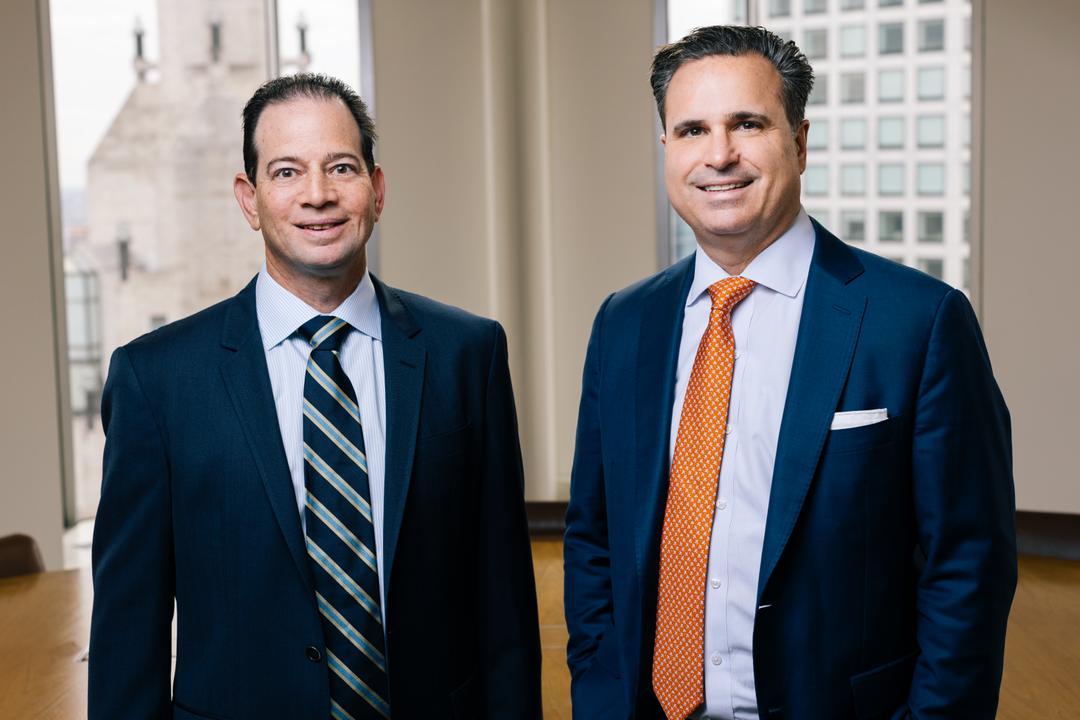
As this represents the first full quarter of results for Baron SMID Cap ETF® (BCSM), we thought it would be helpful to introduce ourselves and outline BCSM’s investment philosophy. The ETF is managed by Laird Bieger and Randy Gwirtzman. Laird and Randy have co-managed the Baron Discovery Fund® together since 2013, and have known each other since meeting in 1997 as classmates at Columbia Business School. Both joined Baron in the early 2000s, where they worked alongside Baron's current Co-CIO, Cliff Greenberg, as analysts on the Baron Small Cap Fund®. We believe our long-standing partnership and complementary skill sets have been key drivers of Baron Discovery Fund’s®* long-term outperformance, and we are excited to bring this proven investment approach to the SMID-cap growth space.
ETF Overview
BCSM is a natural extension of what we have been doing for the past 12-plus years managing the Baron Discovery Fund®. The key distinction is that BCSM makes its initial investments across both small-cap and mid-cap growth companies (i.e. SMID), whereas Baron Discovery Fund® focuses exclusively on initial investments in small-cap businesses. This expanded mandate gives us the flexibility to initiate positions in slightly more mature companies at the outset. Therefore, the overall size of the companies in BCSM (in terms of the weighted average market capitalization of the companies) is about three times that of Baron Discovery Fund®.
The Compelling Opportunity in SMID-Cap Growth Stocks
Many SMID-cap companies are under-researched and remain off Wall Street's radar. By identifying these businesses early, we can invest at the beginning of their growth phase and often at valuations that are discounted relative to larger-cap companies with comparable growth prospects. In addition, SMID-cap stocks tend to be driven more by idiosyncratic, company-specific factors rather than by broader industry or macro-driven events. Together, these characteristics make the SMID-cap growth universe particularly attractive for alpha creation and relative outperformance by fundamental stock pickers like us.
Investment Philosophy
Our investment philosophy at Baron SMID Cap ETF® is the same as that of Baron Discovery Fund®. We focus on small, fast-growing businesses with outsized long-term growth potential, durable competitive advantages, exceptional management teams, and compelling valuations. We prioritize companies with high-quality earnings streams — specifically, businesses with recurring, predictable revenue and strong margins. Through a full market cycle, we have found that these characteristics are most likely to drive superior long-term performance versus the broader market. We target market-leading businesses operating in fastest-growing areas of the economy and, as a result, we have historically been overweight the Information Technology sector and certain Health Care sub-industries such as life sciences tools & services and health care equipment. Finally, we take a longer-term view than most of our peers. We believe that by analyzing our investments over a longer time horizon, we can gain an advantage over market participants who are focused primarily on the short term.
Investment Process
Our investment process is designed to take advantage of market dislocations, and it begins not with valuation, but with quality. We call this process "investing in reverse." It starts with a simple question posed to each sector analyst on the investment team: "Removing current valuation, what are the companies in your particular sub-industry that best fit the criteria we look for in an investment — typically fast-growing, high-margin businesses with favorable long-term prospects?" Those conversations lead to a “shadow list” of potential investments we would like to own if the companies are selling at attractive valuation levels. We call it “investing in reverse” because most investors start their investment process by screening for valuation first and then, after narrowing it down to a select group of companies, use certain quality metrics (revenue and earnings growth, operating margins, and balance sheet leverage) to determine which stocks they should consider investing in. We do the reverse. We screen for companies that hit our quality criteria first, and then we patiently wait for their stocks to get to attractive valuation levels where we believe we can generate outsized returns.
This shadow list is constantly refreshed throughout the year. We track these companies closely, listening to their earnings calls and meeting with their management teams as frequently as possible. Because these companies are typically the fastest-growing and highest-margin businesses in their sectors, they tend to trade at premium valuations in normal market environments — levels that do not meet our return hurdle rate. During market dislocations or company specific stumbles unrelated to the main investment thesis, however, almost every stock trades lower. When the market “throws the baby out with the bathwater” we are poised to make investments that historically have produced some of our highest returns.
Risk Management
Complementing our investment process is an equally disciplined approach to risk management, with a singular focus on balancing portfolio construction. Our objective is to generate alpha primarily through bottom-up stock selection rather than sector allocation, while also seeking to protect capital during market downturns.
The following are the key tenets to our risk management process:
Sector exposures are kept broadly aligned with the Russell 2500 Growth Index (the Benchmark), reflecting our belief that superior long-term results are best achieved through fundamental stock picking rather than making thematic or macro-driven sector calls.
We balance the strategy across three growth profiles: "high growth," "growth," and "other." High growth positions typically consist of earlier-stage companies with novel products or services and a higher risk/return profile, typically growing revenue by more than 20% and exhibiting above-market beta. Growth holdings are more established businesses that generate positive free cash flow and tend to have a beta closer to the market. The “other” category serves as the portfolio's ballast — consisting of lower-beta companies that are less correlated to market movements. Companies in this latter category include special situations—such as activist involvement, management changes, or restructurings—as well as “fallen angels,” or high quality businesses experiencing temporary share price declines unrelated to their long term fundamentals. We believe this balance has meaningfully dampened portfolio volatility over time for Baron Discovery Fund® and believe it will do the same for BCSM.
We also limit individual position sizes such that no single holding exceeds a 4% weight for an extended period. Typically, the portfolio’s 10 largest holdings will account for around 30% of assets, with our largest holdings emphasizing predictable revenue and cash flow characteristics.
Valuation discipline is another core element of our risk management framework. We conduct extensive fundamental research to assess each company’s intrinsic value over one, three, and five year time horizons, and we invest when we believe a stock has the potential to double over five years. As positions approach our long term valuation targets, we trim and redeploy capital into opportunities offering greater upside potential.
Finally, we believe that the most effective form of risk management is deep knowledge of our portfolio companies. Our research process is rigorous and comprehensive, including regular engagement with management teams, customers, suppliers, competitors, and industry experts, as well as attending conferences and visiting key company assets such as manufacturing facilities, distribution centers, and retail or restaurant locations.
Taken together, these principles form a cohesive and disciplined framework that has guided our decision making across multiple market cycles. We believe that this integrated approach—combining rigorous fundamental research, patient capital allocation, and a steadfast commitment to risk management—positions us to deliver superior long term returns for our investors.
Performance
BCSM declined 10.56% (NAV) in the first quarter, underperforming the Benchmark, which declined 3.52%, by 7.04%. To understand the results, it helps to understand the current market environment.
| ETF Market Price1,2 | ETF NAV1,2 | Russell 2500 Growth Index1 | Russell 3000 Index1 | |||||
|---|---|---|---|---|---|---|---|---|
| QTD | (10.75) | (10.56) | (3.52) | (3.96) | ||||
| Since Inception (12/12/2025) | (12.13) | (12.24) | (5.73) | (3.90) | ||||
Performance listed in the above table is net of annual operating expenses. The total annual fund operating expense ratio as of December 5, 2025 was 0.75%. The performance data quoted represents past performance. Past performance is no guarantee of future results. The investment return and principal value of an investment will fluctuate; an investor’s shares, when redeemed, may be worth more or less than their original cost. Total returns assume the reinvestment of all distributions and the deduction of all fund expenses. Current performance may be lower or higher than the performance data quoted. For performance information current to the most recent month end, visit BaronCapitalGroup.com or call 1-800-99-BARON.
During the quarter, investors rotated aggressively into a narrow group of companies perceived to be direct beneficiaries of AI capital spending and electrification — what the market has come to call AI "winners." At the same time, they sold and shorted companies viewed as AI "losers," regardless of underlying business performance. This dynamic was amplified by the growing influence of algorithmic and quantitative traders, whose momentum-driven strategies accelerated the divergence between winners and losers and pushed many stock prices further away from their fundamental values. For bottom-up investors like us, it was a challenging environment — one where strong business results were simply not being rewarded by the market.
That disconnect was evident across our portfolio. Several of our holdings beat their earnings estimates and raised their 2026 guidance, yet saw their stocks decline more than 30% in the period, simply because they were categorized as AI losers. Our software investments were the most significant example of this.
Roughly half of our relative underperformance in the quarter was attributable to software (with the systems and application software sub-industries detracting about 3.5% from relative performance) — an industry where we believe our particular investments are fundamentally misclassified as AI losers, a view we discuss in detail in our Baron Discovery Fund® letter for this quarter. We believe that there are four main categories of software that will co-exist with large language models (LLMs). They include: (1) companies that generate and use deterministic data (only available to the private enterprises, and NOT available to LLMs); (2) highly integrated vertical software providers with extreme domain expertise; (3) companies that combine “atoms and electrons” where the solution needs physical products combined with software; and (4) companies whose software requires regulatory approval such as health care software needing FDA approval.
Offsetting some of the relative underperformance from AI losers was meaningful exposure to several AI winners including optical networking component supplier Coherent Corp., programmable chip maker Lattice Semiconductor Corporation, and power management semiconductor designer Monolithic Power Systems, Inc.
Finally, the outbreak of the Iran conflict drove a sharp spike in energy prices which, when combined with a more challenging consumer backdrop, pressured valuations across higher growth consumer stocks. Given our preference for the fastest growing consumer companies, this headwind affected our holdings more than it did the average portfolio. This impact was compounded by our lack of exposure to the Energy sector—which we typically avoid due to its commoditized nature—resulting in no participation in the sector’s rally (which was up 26.2%), a dynamic we expect to reverse over time. Combined with weakness in Consumer Discretionary, this weighed on relative performance by detracting nearly 2%.
Top Contributors & Detractors
| Contribution to Return (%) | ||
|---|---|---|
| Kratos Defense & Security Solutions, Inc. | 0.62 | |
| Arcellx, Inc. | 0.61 | |
| Coherent Corp. | 0.57 | |
| Masimo Corporation | 0.47 | |
| Lattice Semiconductor Corporation | 0.42 | |
Kratos Defense & Security Solutions, Inc. is a defense technology provider that produces products including unmanned aerial vehicles, hypersonic test vehicles, small turbine and jet engines, solid rocket motors, ballistic missile defense transporters, radio-frequency and microwave electronics, satellite ground station software, high energy lasers, and more. Kratos rallied along with the rest of the defense industry at the start of 2026 after President Trump announced a proposed $1.5 trillion defense budget. The company has also been winning meaningful defense contracts. After shares rallied from about $76 to start the year to nearly $131 at the mid-January high, we sold the position as it had reached our long-term valuation target nearly three years early. This is an example of our risk management process in action. Early in the second quarter we were able to repurchase our position at the low $70’s per share level.
Arcellx, Inc., is a biotechnology company that together with Gilead Sciences, Inc. is developing a next-generation CAR-T cell therapy it calls "anito-cel" for the treatment of multiple myeloma. While we generally do not invest in emerging biotechnology companies, we took a position in Arcellx given that the market is large and proven (currently a $3.5 billion opportunity that could expand to $12 billion or more over time), and because we believe that Arcellx has a safer CAR-T therapy than the currently approved solution. Its primary competitor Carvykti already has nearly $2 billion in sales worldwide in 2025. The issue with Carvykti is that although it's very efficacious, it appears to cause delayed neurotoxicity (neurological damage) in 5% to 10% of patients, and in rare cases (2% or potentially higher) Parkinson’s-like symptoms, which is devastating and uncurable. The promise of Arcellx's anito-cel process is that it appears to have similar efficacy to Carvykti, while avoiding these neurotoxicity risks. We were rewarded for our research when Gilead agreed to acquire the company in the quarter (with the transaction to be completed in June).
Coherent Corp. is a vertically integrated provider of laser-based systems. The company’s lasers are used for high power manufacturing and cutting, semiconductor manufacturing, scientific research, and defense (its legacy markets). It is also one of the leading players in photonics, which uses lasers and other components to transmit information at the speed of light. Coherent is the only major western optical transceiver manufacturer connecting servers within data centers. This is clearly a massive new market given the explosion in AI data center buildouts. In the first quarter, the excitement around AI data center buildouts drove performance in companies like Coherent that are enabling this massive wave of installations.
Coherent is led by CEO Jim Anderson who joined the company in June 2024. He has a top-shelf resume, having been the CEO of Lattice Semiconductor Corporation for the prior six years, and worked at senior positions in Advanced Micro Devices, Inc., Intel Corporation, and Broadcom Inc. before that. We have followed the company since 2010 when it was purely an industrial laser company and have owned it in various other funds at Baron. When we started BCSM, we recognized in Coherent the confluence of terrific leadership and high-quality assets with the massive buildup of AI data centers. The company believes that its existing markets for laser transceivers and optical components are valued at over $50 billion. And new products servicing AI server-oriented markets in particular could be worth an additional $20 billion. These are big opportunities for a company which put up $6.3 billion in revenue in 2025. The opportunities include products like optical circuit switches, co-packaged optics, and multi-rail optical technology. The company benefits from vertical integration as it has high-capacity manufacturing of its own lasers in multiple forms, including Indium Phosphide or InP EML’s (electro-absorption modulated lasers), InP CW’s (continuous wave lasers) and VCSEL’s (vertical cavity surface emitting lasers). Only a handful of companies can do this. And the legitimacy of Coherent’s portfolio was sealed with a $2 billion investment from NVIDIA Corporation made in March 2026 to expand supply and U.S.-based manufacturing of these optical technologies. We believe that over the next five years, Coherent will more than double its revenues and cash flow.
| Contribution to Return (%) | ||
|---|---|---|
| Netskope, Inc. | (1.25) | |
| Flutter Entertainment plc | (0.95) | |
| ServiceTitan, Inc. | (0.94) | |
| Rubrik, Inc. | (0.87) | |
| Fair Isaac Corporation | (0.73) | |
Shares of Netskope, Inc., a cloud security and networking platform for enterprises, were down due to a combination of sector-wide and technical factors rather than fundamental weakness. The entire application software sub-industry experienced a sharp drawdown as investors weighed AI disruption risks, and recent IPOs like Netskope bore the heaviest losses. Adding to the pressure, Netskope's lock-up expiration in mid-March made roughly 390 million shares eligible for sale, creating a supply overhang that coincided with the worst of the software industry sell-off. The business itself performed very well — fiscal fourth quarter (ended January 31, 2026) revenue grew 32%, annualized recurring revenue (ARR) reached $811 million and grew 31%, the company posted record quarterly net new ARR and the company achieved positive free cash flow for the first time. Management guided fiscal 2027 revenue above consensus expectations. We maintain conviction in Netskope's long-term positioning in the secure access server edge market, where demand for securing cloud and AI workloads continues to grow, and view the current valuation as disconnected from the company's growth trajectory and competitive standing.
Shares of Flutter Entertainment plc, the world's largest online sports betting and gaming operator that owns FanDuel, detracted during the quarter and we exited our position. FanDuel's handle decelerated during the fourth quarter as an extraordinary NFL hold rate created recycling headwinds that persisted longer than expected. The impact of unfavorable customer outcomes was compounded by ill-timed promotional reinvestment that failed to re-engage customers. As a result, trends in early 2026 have remain challenged. The market further discounted the stock on a $300 million prediction markets investment embedded in 2026 guidance with no offsetting revenue. The core business economics remain compelling over the long term and FanDuel's #1 competitive position is intact, but we exited our position in favor of DraftKings Inc. DraftKings is a pure-play U.S. business with higher growth, cleaner FCF conversion, and a vertically integrated prediction markets exchange - a structural advantage if prediction markets prove to be a durable opportunity.
Shares of ServiceTitan, Inc., a leading business management software platform for the trades, detracted from performance in the quarter. The company reported strong fiscal Q4 2026 earnings and gave preliminary fiscal year 2027 guidance that was ahead of expectations. Despite these strong results, the stock was weak due to industry-wide AI fears that are hard to disprove in the near term around the potential for AI companies like Anthropic to negatively impact software businesses. We sold the position to re-allocate to higher conviction SMID-cap software ideas.
Portfolio Structure
| Year Acquired | Quarter End Investment Value ($K) | Percent of Net Assets (%) | |||
|---|---|---|---|---|---|
| Samsara Inc. | 2025 | 973.6 | 3.7 | ||
| Dynatrace, Inc. | 2025 | 953.9 | 3.7 | ||
| Guidewire Software, Inc. | 2025 | 836.5 | 3.2 | ||
| Liberty Live Holdings, Inc. | 2025 | 812.0 | 3.1 | ||
| Coherent Corp. | 2025 | 713.4 | 2.7 | ||
| Liberty Media Corporation - Liberty Formula One | 2025 | 696.4 | 2.7 | ||
| Booz Allen Hamilton Holding Corporation | 2025 | 686.2 | 2.6 | ||
| Insulet Corporation | 2025 | 677.6 | 2.6 | ||
| Lattice Semiconductor Corporation | 2025 | 676.4 | 2.6 | ||
| Loar Holdings Inc. | 2025 | 668.6 | 2.6 | ||
The top 10 holdings in the Fund represented 29.5% of total assets. We expect the top 10 holdings to represent about 30% of the portfolio over time.
Recent Activity
| Year Acquired | Quarter End Market Cap ($B) | Net Amount Purchased ($M) | |||
|---|---|---|---|---|---|
| Waystar Holding Corp. | 2026 | 4.6 | 710.3 | ||
| Samsara Inc. | 2025 | 18.4 | 692.8 | ||
| Dynatrace, Inc. | 2025 | 11.0 | 651.0 | ||
| Guidewire Software, Inc. | 2025 | 12.7 | 616.0 | ||
| Axon Enterprise, Inc. | 2025 | 34.1 | 610.8 | ||
We initiated a position in Waystar Holding Corp., a provider of revenue cycle management software (RCM) to health care providers. Waystar has an AI driven, end-to-end suite of solutions that saves their clients massive amounts of working capital costs by getting claims submitted quickly and correctly, and by automating insurance appeals when necessary. With the company trading at under 11 times adjusted cash flow, while also growing cash flow in the low teens, we believe the company is competitively advantaged and very inexpensive.
We increased our position in Samsara Inc. following its fourth quarter results, which reinforced our conviction in the durability of its competitive position. Samsara is an “atoms plus electrons” winner in software. The company has built a proprietary data asset and hardware-based sensor network that, in our view, cannot be replicated by LLMs alone. With likely more than 4 million connected vehicles on the road, millions of asset tags deployed on smaller products, and approximately 25 trillion data points captured annually, Samsara is leveraging its edge sensor network to train purpose-built AI models that drive measurable returns on investment (ROI) for its customers. Critically, this dataset compounds over time. As the network grows denser, Samsara is able to release increasingly powerful versions of its products, including over 40 AI-driven safety detections, smaller and more cost-efficient asset tags, and intelligent preventative maintenance recommendations. These improvements are widening the gap relative to competitors, accelerating market share capture, and strengthening pricing power. Finally, Samsara's asset-oriented business model — which scales with physical infrastructure rather than white-collar headcount — insulates it from the labor disruption that AI may bring to other sectors, while positioning it to grow alongside secular tailwinds such as energy infrastructure expansion and data center buildouts.
We increased our position in Dynatrace, Inc., a provider of “observability” software which uses its own proprietary AI model to predict network and application problems so they can be remediated before they become major issues. Dynatrace is used by many of the world’s largest enterprises, including airlines, banks and defense companies. We believe that the company is a great deterministic data-oriented company, meaning that it uses data that it generates, and which is not available to general LLM providers. Dynatrace benefits from huge competitive advantages as it is complex to implement and therefore very “sticky” and hard to replace with alternative solutions. Customers have also attested to generating extremely high ROIs in Dynatrace. However, given the broad-based sell-off in software stocks, this great company is trading at a rock-bottom multiple (13 times free cash flow, with free cash flow expected to grow in the mid-teens for the next few years).
We added to our position in Guidewire Software, Inc. during the quarter. Overall, our thesis on Guidewire is playing out as expected. Cloud activity is robust and accelerating, with ARR growing through new customer wins, expansions, and migrations of the existing customer base. The approaching end-of-life of on-premise support, combined with strong references from marquee customers such as Liberty Mutual, the Hartford, and Sompo, should further accelerate the shift to the cloud. The company is also ramping investment in product development, which we expect to drive cross-sales into its deep and sticky installed base. We view AI as a meaningful tailwind for Guidewire — helping accelerate product releases and reduce implementation costs, which have historically been a barrier to broader adoption. Despite being temporarily grouped into the AI loser bucket by the market, we believe Guidewire is in fact a vertical domain AI winner. While long-term multiple assumptions remain a point of debate, we believe the stock is worth at least $400 per share when accounting for the company’s free cash flow potential in the next four to five years.
| Year Acquired | Market Cap When Acquired ($B) | Quarter End Market Cap or Market Cap When Sold ($B) | Net Amount Sold ($K) | ||||
|---|---|---|---|---|---|---|---|
| Kratos Defense & Security Solutions, Inc. | 2025 | 12.3 | 18.8 | 374.3 | |||
| Clearwater Analytics Holdings, Inc. | 2025 | 6.4 | 7.1 | 367.5 | |||
| Penumbra, Inc. | 2025 | 12.1 | 13.4 | 318.7 | |||
| Zscaler, Inc. | 2025 | 37.1 | 33.3 | 312.9 | |||
| Exact Sciences Corporation | 2025 | 19.3 | 19.6 | 310.0 | |||
We sold our positions in Penumbra, Inc., Clearwater Analytics Holdings, Inc., and Exact Sciences Corporation as all three companies agreed to be acquired.
We sold our position in Zscaler, Inc., a security software company that provides zero-trust network access to the cloud, corporate network resources and applications. We reallocated capital to increase the Fund’s investment in Netskope, Inc., which provides similar services but is earlier on in its growth trajectory.
Outlook
Despite the challenging quarter, the fundamentals of our portfolio companies remain strong. While stock prices can diverge from underlying business performance in the short term, we do not believe this is a sustainable steady state. Over a full market cycle, it is our conviction that stocks ultimately reflect future free cash flows — not narratives. Given our focus on companies that combine high growth with strong free cash flow generation, we believe intrinsic value will assert itself over time. The AI winner versus AI loser dynamic that drove so much of the market behavior this quarter will not last forever, and when the market returns to rewarding fundamental performance, we believe our portfolio is well positioned to benefit.
Sincerely,


Featured ETF
Learn more about Baron SMID Cap ETF.
- NAV$24.51As of 09/25/2026
- Market Price$24.55As of 09/25/2026