
SpaceX: Lift Off!
Space
Falcon 9 Launch and Reusability
The Falcon 9, SpaceX’s “workhorse” rocket, has redefined the space launch market by offering more reliable and more available access to space at a fraction of the cost. SpaceX’s newest rocket, Starship V3, promises to revolutionize space access even more through reducing costs by orders of magnitude over time.
The dominance of SpaceX’s launch segment is demonstrated by a record 165 Falcon rocket launches in 2025, which represented about 80% of global mass to orbit. (China, in comparison, achieved 93 orbital space launches in 2025, accounting for 10%–15% of global mass to orbit.)1 The Falcon launch figure marks growth from 134 in 2024, a close to 25% increase. The 165 Falcon missions in a single year easily surpasses the 135 Space Shuttle missions flown by NASA over a 30-year period.2 This increased launch cadence presents SpaceX with multiple advantages, including greater revenue potential, improved Starlink deployment efficiency, and reduced launch costs.
The essential pillar of Falcon’s success and competitive edge is SpaceX’s mastery of rocket reusability. Since its inception, SpaceX has launched more than 650 times, of which around 85% of missions have leveraged a flight-proven (reused) booster. As of May 2026, SpaceX had already launched a fleet of 17 boosters, each flying 20 times or more. The record-holding booster, serial number 1067, performed its inaugural flight in 2021. With 35 missions, this booster has launched 8 astronauts, nearly 6 tons of supply to the ISS, several hundred Starlink satellites, and multiple third-party commercial satellites to orbit.3
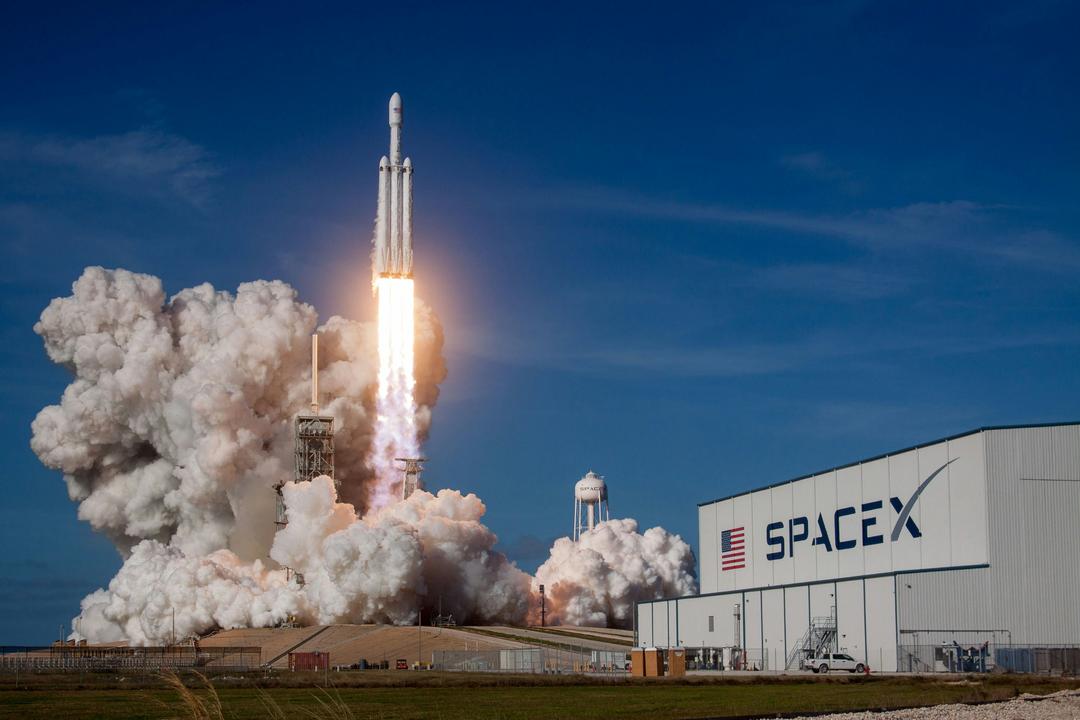
Central to SpaceX’s cost advantage is the reusability of their hardware—most notably boosters—which the company recovers, refurbishes, and reflies many times instead of discarding after single use. Space flight that historically cost billions per launch now costs in the tens of millions. The first version of Falcon 9 in 2010 had a launch cost of approximately $2,700 per kilogram, an 85% reduction from the historical cost of $18,500 per kilogram. The Falcon Heavy in 2018 further reduced this cost to approximately $1,400 per kilogram.4

SpaceX Falcon 9 rocket (Photo: SpaceX)
650+Total SpaceX launches | 85%Flown on a reused (flight-proven) booster | 17Boosters with 20+ flights each | $1,400/kgFalcon Heavy cost per kg — vs. $18,500 historically |
Starship's Development Program
SpaceX is a proven disruptor and its own fiercest competitor. Despite being the clear leader in launch, SpaceX’s mission and innovation culture continue to drive the technology forward.
Starship has performed several successful flight tests, including inspiring mid-flight catches of the Super Heavy booster. When fully operational, Starship promises unparalleled reduction in launch costs, enhanced availability, and expanded volumetric and gravitational capabilities for payloads destined for low-Earth orbit, the Moon, and eventually Mars.
Starship, SpaceX’s revolutionary new launch vehicle, is poised to significantly expand SpaceX’s growth opportunities and strengthen its competitive position.
At a towering 407 feet and an unprecedented thrust of over 16 million pounds, Starship has earned its title as the largest and most powerful rocket ever flown. This behemoth is expected to enhance SpaceX’s reusability-driven efficiencies by becoming the world’s first fully and rapidly reusable rocket, while pushing the boundaries of orbital vehicle performance. With an anticipated payload capacity of up to 200 metric tons, in-orbit refueling capabilities, and a reliable and rapidly reusable architecture, Starship will allow the transport of larger payloads deeper into space than ever before.5
As of mid-June 2026, SpaceX had conducted 12 Starship flight tests. Several of these demonstrated substantial progress including: achieving orbital speed for the first time, nearly flawless Raptor engine performance, successful hot-staging separations between the Super Heavy booster and Ship, multiple soft landings in the ocean, and three remarkable mid-air catches of the Super Heavy booster by SpaceX’s Mechazilla mechanical system on the launch and catch tower.
Starship V3 will launch 100 tons of payload to orbit in a reusable configuration and up to 400 tons as an expendable vehicle,6 significantly more than Falcon 9’s capacity of 17 to 23 tons.7 The company’s goal is to reduce Starship’s launch costs to $2 to $3 million per flight, which could lower the cost of launching a kilogram to low-Earth orbit to just tens of dollars.8 This would represent a significant decrease from Falcon 9’s current cost, illustrating the transformative potential of Starship.9
In the coming years, SpaceX expects to meaningfully accelerate its launch rate. The goal for the next Starship, V4, is to launch "every hour," said Musk, a schedule that would result in thousands of flights per year for SpaceX's fleet.10
The company has already been awarded contracts leveraging Starship’s unique capabilities, including multi-billion dollar awards for the Human Landing System as part of NASA’s Artemis Program aimed to return U.S. astronauts to the Moon.
During our 2024 Annual Baron Investment Conference, SpaceX President and Chief Operating Officer Gwynne Shotwell noted that, “ultimately, I think Starship will be the thing that takes us over the top as one of the most valuable companies. We can’t even envision what Starship is going to do to humanity and human … lives, and I think that will be the most valuable part of SpaceX.”11

Starship Test Flight Mission (Photo: SpaceX)
407 ftTall — largest rocket ever flown | 16 million poundsOf thrust — most powerful ever | 200 metric tonsAnticipated payload capacity, up to | 12Starship flight tests |
Connectivity
We view SpaceX’s satellite broadband segment, Starlink, as a key economic driver for the company.
The company is currently operating about 9,600 satellites for Starlink. This represents an unprecedented launch cadence and has positioned the company as the largest satellite constellation operator by more than a factor of 10. In fact, as of March 31, 2026, SpaceX was operating roughly 75% of all active maneuverable satellites.12
During 2025 and through May 2026, the company launched about 4,000 new satellites. All Starlink satellites were second-generation satellites, offering four times higher throughput than the original satellites.13 The combination of more satellites and higher throughput allows the network to be more robust and offers better coverage around the world.
The introduction of the Starlink Mini kit in 2024 provides a smaller, more portable, and more affordable solution catering to customers with higher mobility needs. This, coupled with a significant expansion in production capacity for customer kits at the company’s Bastrop facility, should enable even faster growth for Starlink.14
Starlink also achieved robust growth among users, reaching over 12 million active subscribers—more than double the subscribers at the close of 2024. Starlink is now available in more than 160 countries and territories, covering an area with a total population of over three billion people.15
Starlink achieved notable growth in both the maritime and aviation sectors, highlighted by a milestone contract with United Airlines and Air France to equip their entire fleets with Starlink. Starlink has already been installed on more than 2,500 planes, signaling a rapid expansion of its footprint in the sector. In maritime, Starlink serves approximately 150,000 vessels that consume 50 petabytes of data each month. With over 300 cruise ships subscribed to the network, Starlink is used by 20 million passengers annually, or close to 30% of global cruise ship passengers.16
Starlink, SpaceX’s satellite broadband network, is a key economic driver for the company and is growing rapidly.
As part of 2025’s Starlink buildup phase, the company also launched more than 650 satellites with direct-to-cell capabilities. This functionality allows the company to offer connectivity to billions of potential cellular and other internet-connected devices across the world. The company announced a list of partners and launched the service in late 2024 in New Zealand, in partnership with One New Zealand, and in early 2025 in the U.S., in partnership with T-Mobile.17 In November 2025, Starlink signed a direct-to-cell agreement with Dubai-based telecom company VEON. The deal will provide satellite-to-phone connectivity to over 150 million potential customers across VEON's operating companies.18 As of March 31, 2026, Starlink provides mobile services to approximately 7.4 million monthly unique devices across 30 countries.19

Starlink Mission (Photo: SpaceX)
9,600Satellites for Starlink | 75 %Of all active satellites in orbit | 12 millionActive subscribers, mid-2026 | 160Countries and territories served |
Artificial Intelligence
SpaceX will draw upon its unique infrastructure to develop frontier AI models. SpaceX’s ownership of compute infrastructure and vertical integration across the full AI stack gives it significant capabilities compared to competitors. The underlying hardware infrastructure is tailored to the model’s training and iteration, making the process faster, more efficient, and more effective. The infrastructure offers access to the computing power needed to run AI models, which is facing accelerating demand and, according to SpaceX, exceeds the U.S.’s ability to generate capacity.
Because SpaceX has invested in data centers and demand has risen so sharply, it has been able to rent out compute capacity to other tech companies at advantageous terms. In May, Anthropic announced a deal to use all of SpaceX’s Colossus 1 data center in Memphis, Tennessee—for $1.25 billion per month (or more as usage rises). In June, Google announced it would rent capacity from SpaceX—for $920 million per month. These agreements are relatively flexible (they can be terminated by either party with 90-day notice), allowing SpaceX to focus on its own AI development and/or monetize its capacity.
Outside of infrastructure, SpaceX’s AI capabilities are integrated across Grok and X, which together have over 1.3 billion supported accounts, including approximately 550 million monthly active users (MAUs). These users generate about 350 million posts each day, and about 117 million MAUs use Grok’s AI features.18 SpaceX cites the X platform as a competitive differentiator, since it allows Grok “direct, real-time access to information and human discourse,” which in turn enhances the model’s “truth-seeking capabilities by grounding outputs in up-to-date knowledge and diverse viewpoints.”20 The model’s capabilities make it ideal for high-frequency, high-value use cases across consumer and enterprise AI applications.
Elon Musk, who was a co-founder and early financier of OpenAI, believes AI applications are fundamental to SpaceX’s long-term success. In its S-1 Form filing, SpaceX estimated its total addressable market (TAM) at $28.5 trillion—comprising $370 billion in Space; $1.6 trillion in Connectivity; and $26.5 trillion in AI across $2.4 trillion in AI infrastructure, $760 billion in consumer subscriptions, $600 billion in digital advertising, and $22.7 trillion in applications.
Ultimately, SpaceX believes its access to unique sources of data, along with its access to its own data centers, will help it develop leading AI models that can deliver solutions to businesses, consumers, governments, and society.21
On June 16, 2026, SpaceX announced their acquisition of AI start up Cursor. SpaceX is describing the deal as part of its strategy to vertically integrate compute infrastructure, models, and applications, accelerate its development of AI-native software tools, and combined with SpaceX's compute capacity, strengthen its position in AI-assisted developer productivity.22

AI Business (Photo: SpaceX)
$1.25 billion/monthAnthropic — full Colossus 1 data center | $920 million/monthGoogle — capacity for Gemini Enterprise | 550 millionMonthly active users across Grok & X | $26.5 trillionAI market — the bulk of SpaceX's TAM |
SpaceX: Into the Future23
The creators of foundational technologies and systems (e.g., steam power, electricity, the internet) rarely know the scope of their applications or the size of their total addressable markets. What was once extraordinary—e.g., mobile communication, open-heart surgery, intercontinental air travel—is now routine. We believe the space economy is no different, and SpaceX has detailed several scenarios that it is seeking to make reality.
Point-to-point Earth transport. Starship could enable passengers and cargo to travel between major cities in a fraction of current transit times.
Space tourism. We expect increasing interest in human space travel as it becomes easier and more common to access space.
In-orbit manufacturing. In-space manufacturing facilities can leverage microgravity conditions of space to produce materials, pharmaceuticals, and advanced components that are difficult or impossible to manufacture on Earth.
Inter-planetary passenger and cargo transport. Large-scale passenger and cargo missions can deliver the people, equipment, and supplies needed to establish permanent human settlements on the Moon and other planets.
Energy production on the Moon and Mars. Large-scale solar energy production on the Moon and Mars that takes advantage of the thin atmosphere and constant solar exposure.
Manufacturing capabilities on the Moon and Mars. Manufacturing infrastructure on the Moon and Mars that uses local resources to produce fuel, construction materials, etc.
Asteroid mining. Mining operations to extract metals and other resources from near-Earth and main-belt asteroids.
Conclusion
SpaceX’s incredible accomplishments have transformed the space industry in ways that other companies and governments had not considered feasible. This has created significant value for stakeholders, including employees, shareholders, consumers, and governments. Its promise to make life multiplanetary has the potential to change the course of humanity.
SpaceX is an ideal example of a Baron Capital-style investment. First, SpaceX benefits from attractive markets supported by long-term secular trends. The space launch and space applications markets, such as broadband from space, are large and rapidly growing, driven by declining orbital launch costs, technology innovation, and an evolving regulatory environment. Second, SpaceX has built layers of competitive differentiation by leveraging its strong first-mover benefit, unique technology architecture, talent, culture, and significant scale. Third, management has proved, over many years and occasions, their ability to deliver high-quality results well beyond elevated expectations, which are often considered impossible by competitors and industry experts.
We have been studying SpaceX for close to a decade. Our confidence in the opportunity has increased dramatically over the years, and we remain extremely excited about SpaceX’s long-term prospects.